A commission built across France’s national parks
The Ljubljana presentation grew from Patrick’s sustained work with Parcs nationaux de France. Travelling through the parks with a large-format 4×5-inch camera, he photographed mountain ranges, forests, coastlines and volcanic terrain with the deliberate pace that defines his practice. The camera demands preparation: scouting the site, returning for the right conditions and waiting until landscape and light become inseparable.
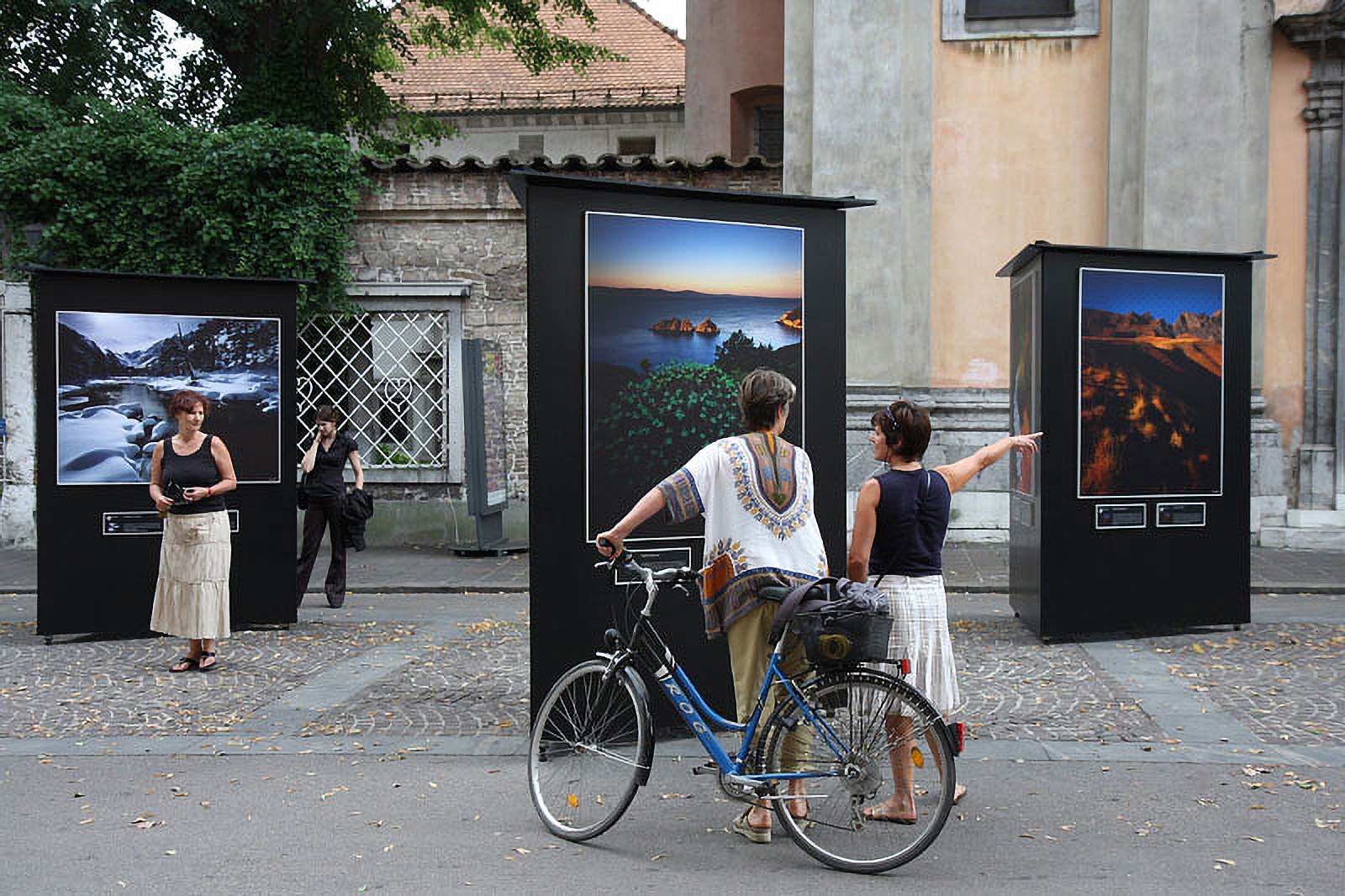
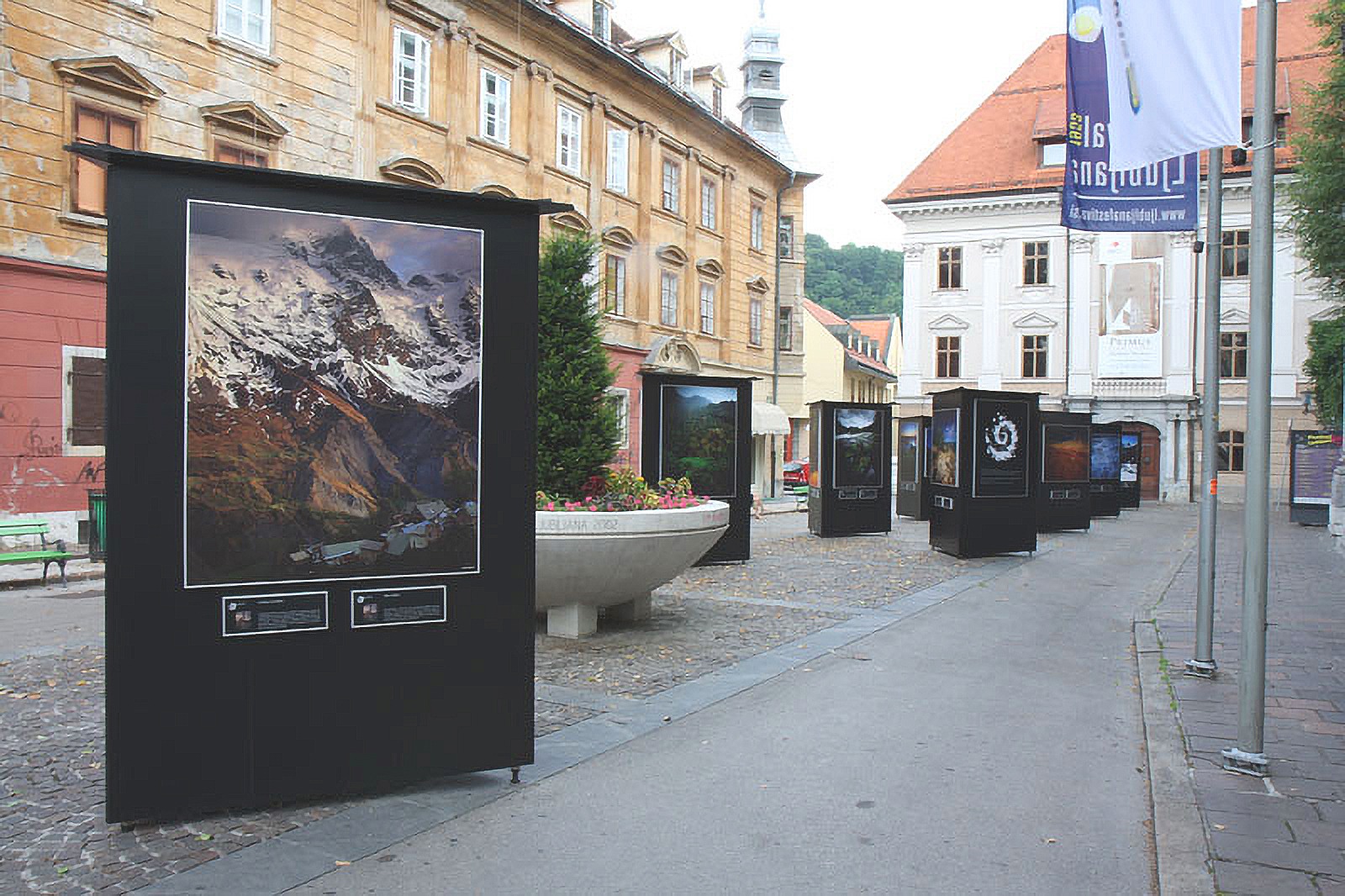
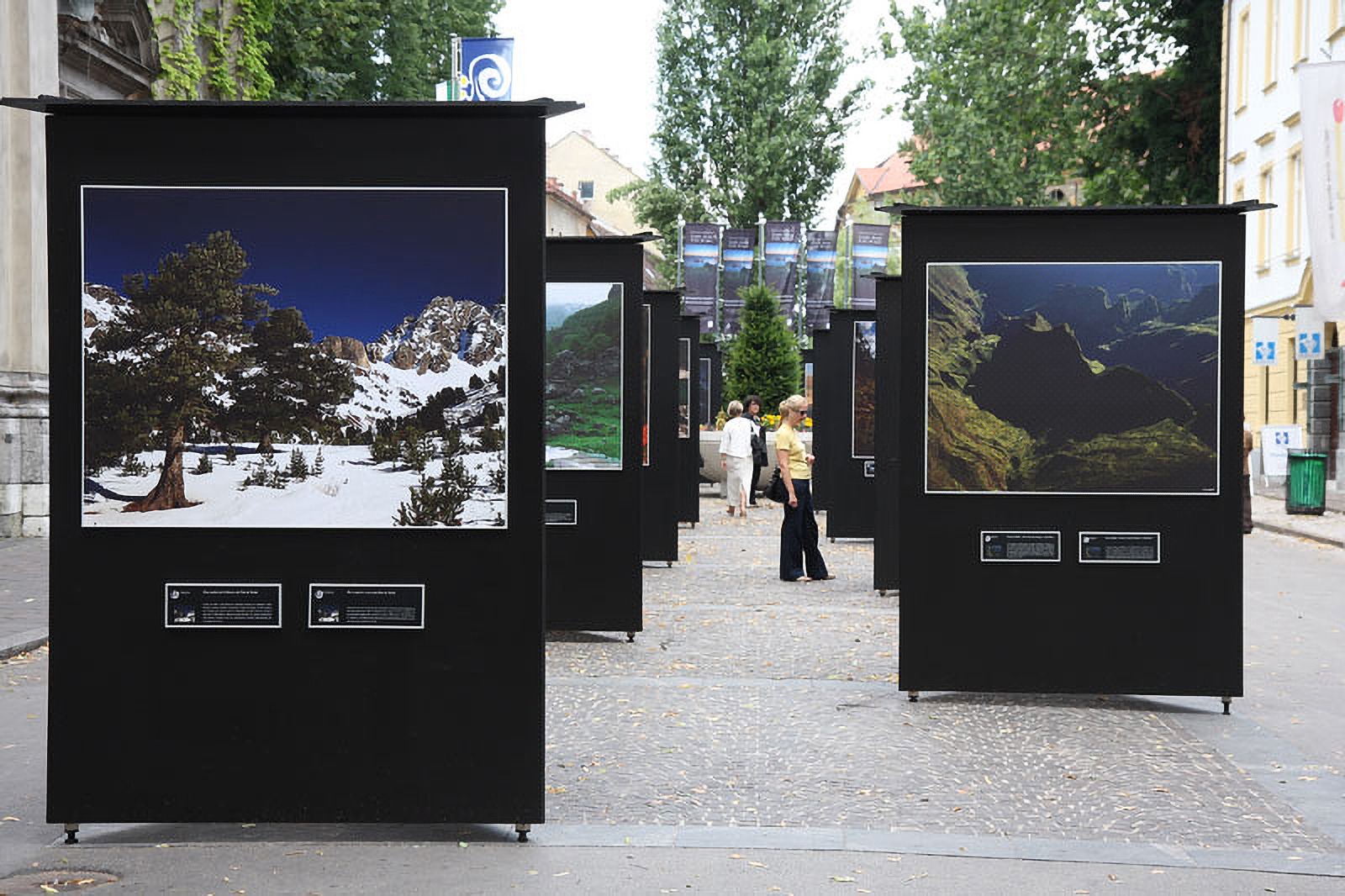
Official French National Parks material describes the project as a celebration of the exceptional landscapes protected by the national-park network. In Ljubljana, those images appeared at an architectural scale, mounted on freestanding black panels that created a visual route through the city. Snow-covered highlands, crater forms, valleys and Mediterranean coastlines were presented not as tourist snapshots, but as individual portraits of living environments.
“The exhibition magnifies the exceptional landscapes that are the national parks.”— Parcs nationaux de France, 2008 activity report (translated from French)
A partnership between nature, culture and diplomacy
The official record identifies Parcs nationaux de France and MEEDDAT—the French ministry then responsible for ecology, energy, sustainable development and spatial planning—as joint organisers. The wider exchange was supported through French–Slovenian diplomatic cooperation during the two EU presidencies.
This institutional framework matters. The exhibition treated landscape photography as more than representation: it became a common language through which two countries could speak about stewardship, biodiversity and the public value of protected land. By placing the works outdoors, the organisers removed the threshold of the museum. Residents and visitors met the images as part of the life of the city.
From Ljubljana to a wider touring programme
After Slovenia, the exhibition was presented in Guadeloupe for the national-parks meetings and was intended to circulate through the French parks in 2009 and 2010. Patrick’s biography records sixteen large-format exhibitions developed with French National Parks and the Ministry of Ecology between 2008 and 2015, demonstrating how one body of landscape work evolved into a sustained public programme.
The photographs also reached the printed page. Les Parcs nationaux en France, published by Aubanel in 2009 with text by Michel Fonovich and a preface by Nicolas Hulot, extended the project into book form. In 2010, the book received second place in France’s National Tourism Awards, adding another chapter to the work’s public recognition.
The foundations of Patrick’s monumental art
For collectors encountering Patrick through The VAT Collection, Ljubljana reveals an essential continuity. Long before fermentation became a cosmic field of colour, he was already studying natural systems through light and producing photographs with an architectural presence. The subject changed—from protected landscapes to the living matter of wine—but the underlying discipline remained: patient observation, large-format precision and the transformation of natural phenomena into art.
The Ljubljana installation also shows that scale has never been an afterthought in Patrick’s work. His pictures are composed to hold distance, command space and then reward close looking—the same qualities that now define his monumental limited-edition works.